
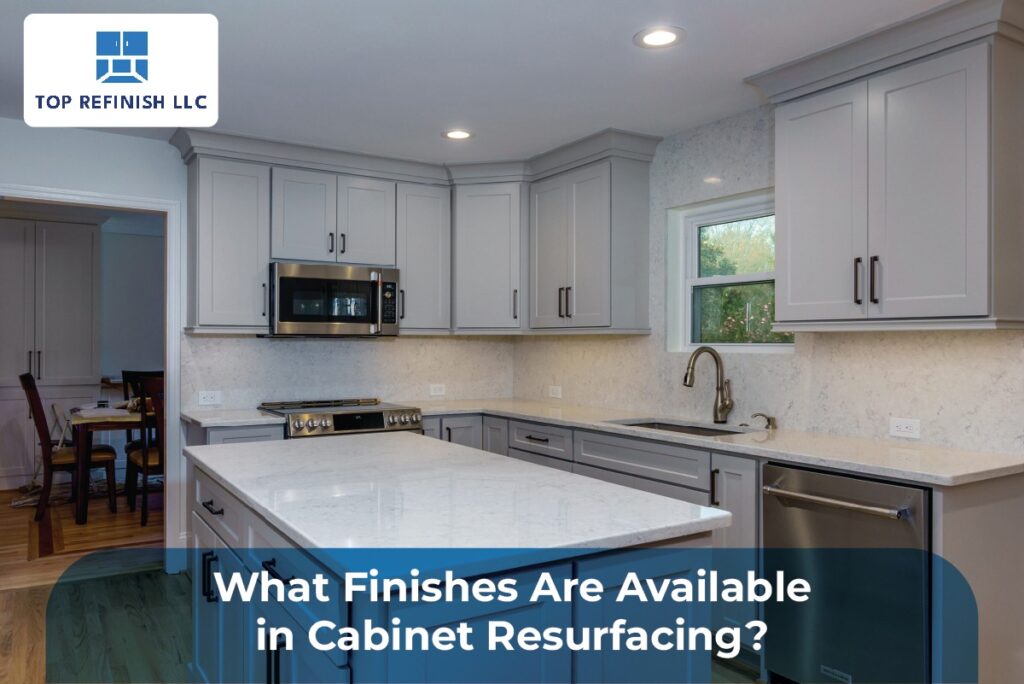
Your kitchen cabinets take up more visual space than almost any other feature in your home. So, when they start looking outdated or worn, the entire room feels tired. Fortunately, cabinet resurfacing offers a smart and budget-friendly way to transform your kitchen without the cost or mess of a full remodel. Instead of tearing everything out, resurfacing updates the exterior surfaces—giving your cabinets a fresh, modern appearance.
But here’s the big question homeowners ask: what finishes are actually available in cabinet resurfacing? From classic wood stains to sleek painted finishes and modern laminates, you have more options than you might think. In this guide, we’ll walk you through every major cabinet finish, explain how they work, and help you confidently choose the right look for your space.
Why Cabinet Finishes Matter More Than You Think
When people think about cabinet resurfacing, they often focus on color. However, the finish you choose does much more than change the shade of your cabinets. It impacts durability, maintenance, texture, and even how light reflects throughout your kitchen. In other words, the right cabinet finish can dramatically influence both aesthetics and functionality.
For example, a high-gloss finish creates a modern, reflective look that makes small kitchens feel larger. On the other hand, a matte or satin finish delivers a softer, more traditional appearance. Additionally, certain finishes resist moisture and stains better than others, which is crucial in high-traffic kitchens. By understanding the available cabinet refinishing options, you can make a choice that enhances both beauty and performance.
Painted Finishes: Clean, Versatile, and Always in Style
Painted finishes remain one of the most popular choices in cabinet resurfacing—and for good reason. They offer unlimited color possibilities, allowing homeowners to match virtually any kitchen design theme. Whether you love crisp white cabinets, bold navy blue, or trendy sage green, painted cabinet finishes give you flexibility and creative control.
Moreover, modern cabinet painting techniques use high-quality primers and protective topcoats that improve durability. Professional resurfacing services often apply multiple layers to ensure smooth coverage and long-lasting results. You can choose from matte, satin, semi-gloss, or high-gloss paint finishes depending on your desired sheen. Satin and semi-gloss are particularly popular because they balance durability with easy cleaning. If you want a timeless, bright kitchen makeover, painted finishes are a strong contender.
Stained Wood Finishes: Highlight Natural Beauty
If you appreciate the warmth and character of real wood, stained finishes might be your ideal solution. Instead of covering the wood grain, staining enhances it. This option works especially well when your existing cabinet doors are made from quality hardwood such as oak, maple, or cherry.
Stained cabinet finishes come in a variety of tones, from light natural hues to deep espresso shades. A light stain can give your kitchen a Scandinavian or farmhouse vibe, while darker stains create a rich, sophisticated atmosphere. Additionally, stain penetrates the wood rather than sitting on top like paint, which allows the natural grain patterns to remain visible. When paired with a protective clear coat, stained finishes provide both elegance and resilience, making them a long-term investment in your home’s value.
Laminate and Thermofoil Finishes: Modern and Low Maintenance
For homeowners seeking a sleek and contemporary look, laminate and thermofoil finishes offer excellent alternatives. These materials are applied over cabinet surfaces to create a smooth, uniform appearance. Unlike traditional wood finishes, laminate cabinets can mimic wood grain, solid colors, or even textured designs.
Thermofoil finishes, in particular, are created by bonding a vinyl layer to medium-density fiberboard (MDF) using heat and pressure. This process results in a seamless surface that resists moisture and stains. As a result, thermofoil cabinets are easy to clean and maintain. However, they may not handle high heat as well as solid wood. Still, for budget-conscious homeowners who want a clean, modern aesthetic, laminate and thermofoil resurfacing options provide an affordable and practical solution.
Glazed Finishes: Add Depth and Character Instantly
If you want your cabinets to stand out with dimension and detail, glazed finishes are worth considering. Glazing involves applying a semi-transparent layer over painted or stained cabinets to accentuate edges, grooves, and decorative features.
This technique works particularly well for traditional or rustic kitchen designs. For instance, a white cabinet with a subtle brown glaze can create an antique or distressed effect. Similarly, darker glazes over stained wood can enhance architectural details. Glazed finishes bring personality to cabinetry while maintaining a polished appearance. Therefore, if you’re aiming for depth and character rather than a flat, uniform look, glazing adds that extra design element.
Distressed and Antiqued Finishes: Rustic Charm That Feels Authentic
Distressed cabinet finishes have grown increasingly popular among homeowners who love farmhouse, cottage, or vintage-style kitchens. This finish intentionally creates a worn or aged look through sanding techniques, glazing, or hand-applied treatments.
Although distressed cabinets appear aged, professionals carefully control the process to ensure consistency and durability. The result feels authentic rather than accidental. Additionally, distressed finishes can hide minor imperfections and daily wear, making them practical for busy households. When paired with modern hardware, this finish strikes a balance between old-world charm and contemporary convenience. If you want warmth and character with a lived-in feel, distressed resurfacing options deliver that inviting touch.
High-Gloss and Matte Finishes: Choose Your Shine Level
Sheen plays a major role in the outcome of your cabinet resurfacing project. High-gloss finishes reflect light, creating a sleek and modern appearance. They are especially popular in contemporary and minimalist kitchens. Because they reflect so much light, they can make small kitchens feel larger and brighter.
Conversely, matte finishes provide a softer, understated look. They reduce glare and conceal fingerprints better than glossy surfaces. Satin finishes fall in between, offering a subtle sheen without overwhelming shine. When selecting your cabinet resurfacing finish, consider how much natural light your kitchen receives and how often the space is used. Ultimately, the right sheen enhances both design and daily usability.
Specialty Finishes: Custom Looks That Make a Statement
Beyond standard paint and stain, cabinet resurfacing also offers specialty finishes. These include metallic coatings, textured surfaces, two-tone combinations, and custom color matching. Homeowners increasingly opt for two-tone cabinets—such as darker base cabinets paired with lighter upper cabinets—to create contrast and visual interest.
Additionally, some resurfacing services provide eco-friendly finishes with low volatile organic compounds (VOCs), improving indoor air quality. Specialty finishes allow you to personalize your kitchen while staying within your renovation budget. If you want a truly unique design, working with experienced professionals ensures your custom finish looks flawless and lasts for years.
How to Choose the Right Cabinet Finish for Your Home
With so many cabinet resurfacing finishes available, making the right choice can feel overwhelming. However, you can simplify the decision by considering three main factors: lifestyle, design goals, and budget.
First, think about daily use. If you cook frequently and have children, durability and easy cleaning should be priorities. Second, evaluate your kitchen’s existing elements—countertops, flooring, backsplash, and lighting. Your cabinet finish should complement these features rather than clash with them. Finally, set a realistic budget. While painted and stained finishes are often cost-effective, specialty treatments may require additional investment. Consulting with a professional cabinet refinishing expert can help you compare options and confidently select the perfect finish.
Wrap-Up
Cabinet resurfacing opens the door to endless design possibilities without the expense of a full kitchen renovation. Whether you prefer classic painted cabinets, warm wood stains, sleek laminates, or custom specialty finishes, there’s an option to match every style and budget. More importantly, the right finish enhances durability, boosts home value, and refreshes your entire space.
By carefully considering sheen, maintenance, and design preferences, you can create a kitchen that feels brand new. So, if your cabinets look outdated but remain structurally sound, resurfacing might be the smart upgrade you’ve been searching for. Explore your finish options today and give your kitchen the transformation it truly deserves.
FAQs
1. How long does cabinet resurfacing last?
When done professionally, cabinet resurfacing can last 10 to 20 years, depending on the finish and maintenance routine.
2. Is a painted or stained finish more durable?
Both can be durable when properly sealed. However, stained finishes often hide scratches better, while painted finishes offer more color flexibility.
3. Can I change cabinet hardware during resurfacing?
Yes, resurfacing is the perfect time to upgrade knobs, pulls, and hinges for a complete transformation.
4. Are eco-friendly cabinet finishes available?
Yes, many contractors offer low-VOC and environmentally friendly finishing options that improve indoor air quality.